Driven to change: Influential Black Americans in the automotive industry
From the early days of automobile manufacturing to the present, Black workers, engineers, and entrepreneurs have played a crucial role in shaping the automotive industry.
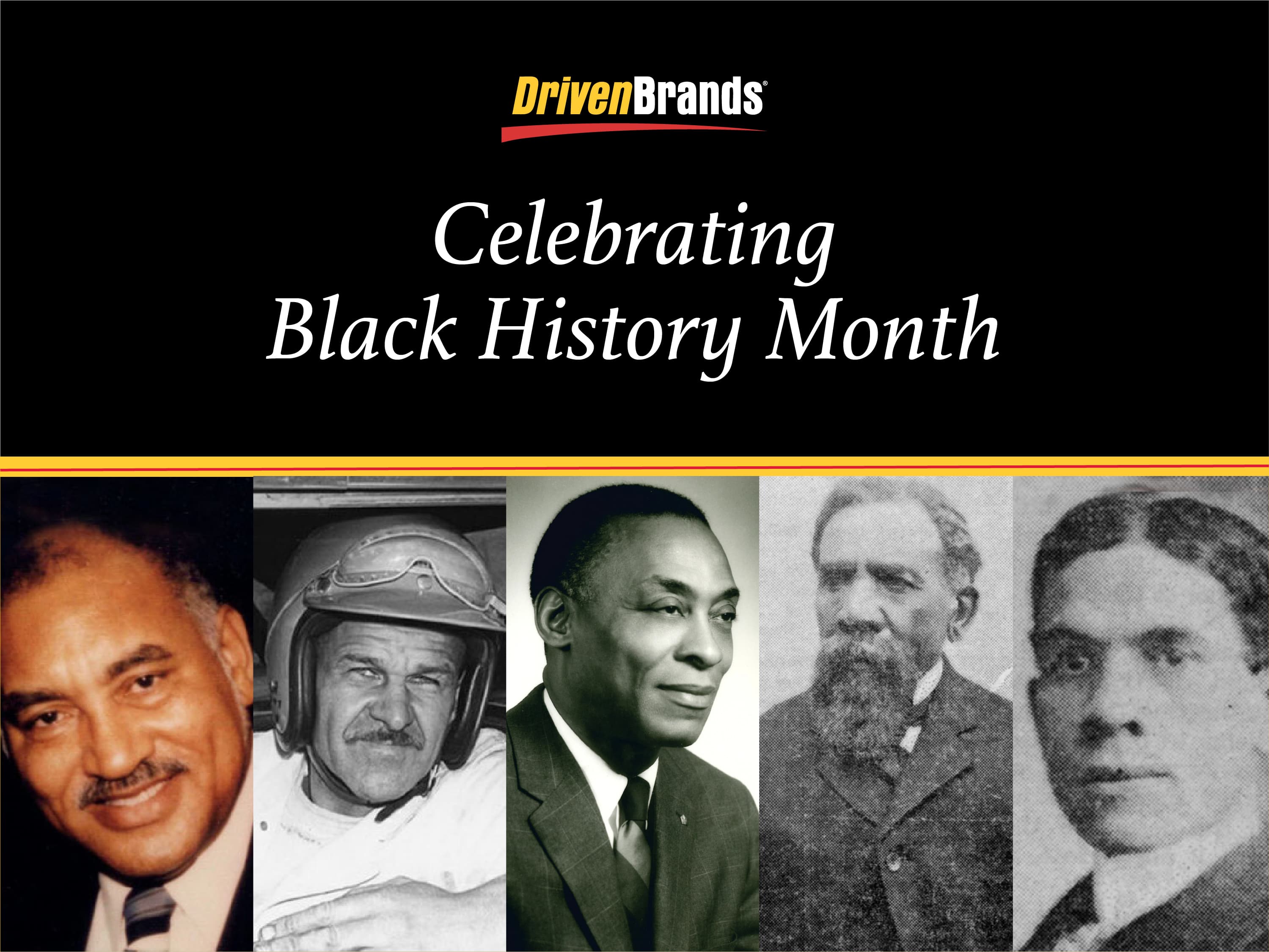
Black History Month is a time to remember and honor the legends that had – and continue to have – an impact on the industry we know today.
Meet four Black Americans who revolutionized the automotive industry.
Charles and Frederick Patterson
Born as a slave on a Virginia plantation in 1833, Charles Richard Patterson would go on to open the first and only Black-owned car company in America.
Charles escaped slavery at 28 years old and started a new life in Greenfield, Ohio. There, he met carriage manufacturer J.P. Lowe, and together, they began a successful business of manufacturing horse carriages. In 1893, Charles bought out Lowe’s portion of the company and renamed it C.R. Patterson and Sons. His son, Frederick, inherited the business after Charlies died in 1910.
In 1939, after the Great Depression, C.R. Patterson and Sons was forced to close its doors for good.
Fun fact: C.R. Patterson & Sons became the go-to brand for buses in Midwestern school districts that had recently converted from horse-drawn carriages in 1920.
Edward Davis
Edward Davis graduated from Detroit’s Cass Technical High School to pursue a career in automobiles, but with no experience and unwritten barriers to employment for Black Americans at the time, he struggled to find a job. Instead, Davis struck out on his own and opened a service garage. A Dodge plant supervisor became a regular customer, eventually offering him a job at the Dodge Hamtramck assembly facility.
From there, Davis went on to work at a Dodge dealership. His office was in a storeroom on the second floor, far away from the showroom. But Davis was undeterred. He furnished it himself, worked hard to meet the needs of the growing Black American population in Detroit and became the dealership’s sales leader.
Davis opened Davis Motor Sales in 1938. By 1940, the Studebaker Corporation awarded Davis a dealership. Studebaker declared bankruptcy in 1956, which set Davis on a new mission to acquire a franchise from one of the “Big Three” (GM, Ford, Chrysler). He was denied countless times based on the color of his skin, until Chrysler Corporation released a statement that they would “appoint dealers who qualified, regardless of color.”
In 1963, he was awarded a Chrysler-Plymouth franchise in Detroit that he operated until his retirement in 1971.
To honor his contribution and dedication to the industry, Davis became the first black inductee in the Automotive Hall of Fame in 1996.
Fun fact: In retirement, Davis served as the general manager of the Detroit mass transit system after being appointed by the city’s mayor.
McKinley Thompson, Jr.
Born and raised in New York City, McKinley Thompson Jr. served in the U.S. Army as an engineering design layout coordinator in World War II. After the war, he went on to win a scholarship to the ArtCenter College of Design in Pasadena, California.
After graduating in 1956, McKinley was hired as the first Black American automotive designer at Ford. His career at Ford spanned more than 25 years, and he played a key role in designing many of Ford’s iconic vehicles, including the Ford Bronco, the Ford Mustang, Ford Thunderbird, and Ford GT40 racing car.
Fun fact: In addition to breaking barriers at Ford, McKinley also was the first Black person to attend and graduate from the ArtCenter College of Design.
Wendell Scott
Wendell Scott’s first job “behind the wheel” was a taxi driver. He then went on to further hone his skills as a mechanic in the segregated army in Europe during World War II.
His racing career began in 1947 when he experienced immediate success at local area tracks. He gained the attention of the officials of the Dixie Circuit, a regional racing organization, who were looking for Black drivers to compete as part of a promotion designed to boost attendance. On May 23, 1952, Scott made history by racing on the Danville Fairgrounds dirt track in his old Ford. He won third place.
Despite the challenges Scott faced as a Black racer in the segregated South in the 1950s and 60s, he persisted. Scott went on to break many barriers in the sport, including being the first Black driver to race full time in the NASCAR premier series and the first to win a race.
Scott was posthumously inducted into the NASCAR Hall of Fame in 2015.
Fun fact: His self-built 1962 Chevrolet is currently on display at the NASCAR Hall of Fame in Charlotte, North Carolina.
From the design room to the showroom to the race track, these Black American pioneers transformed the automotive industry through their labor, innovation, and perseverance. We celebrate their stories and thank them for their role in shaping the road we travel today.